TRAVEL GUIDE · SOUTH KOREA
Korea’s 17 UNESCO World Heritage Sites
How many are open to visitors — and which ones are actually worth the trip?
South Korea’s 17 UNESCO World Heritage Sites: A Traveler’s Guide Beyond the Usual Itinerary
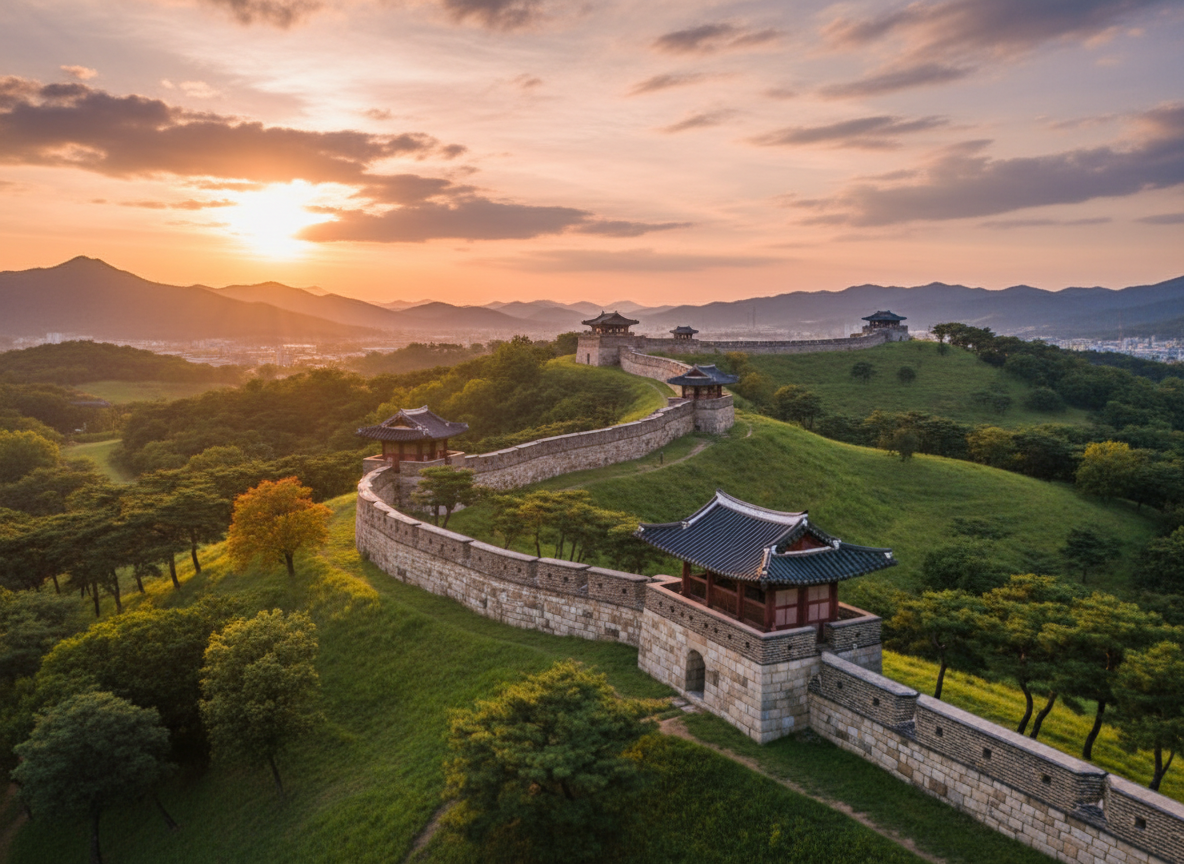
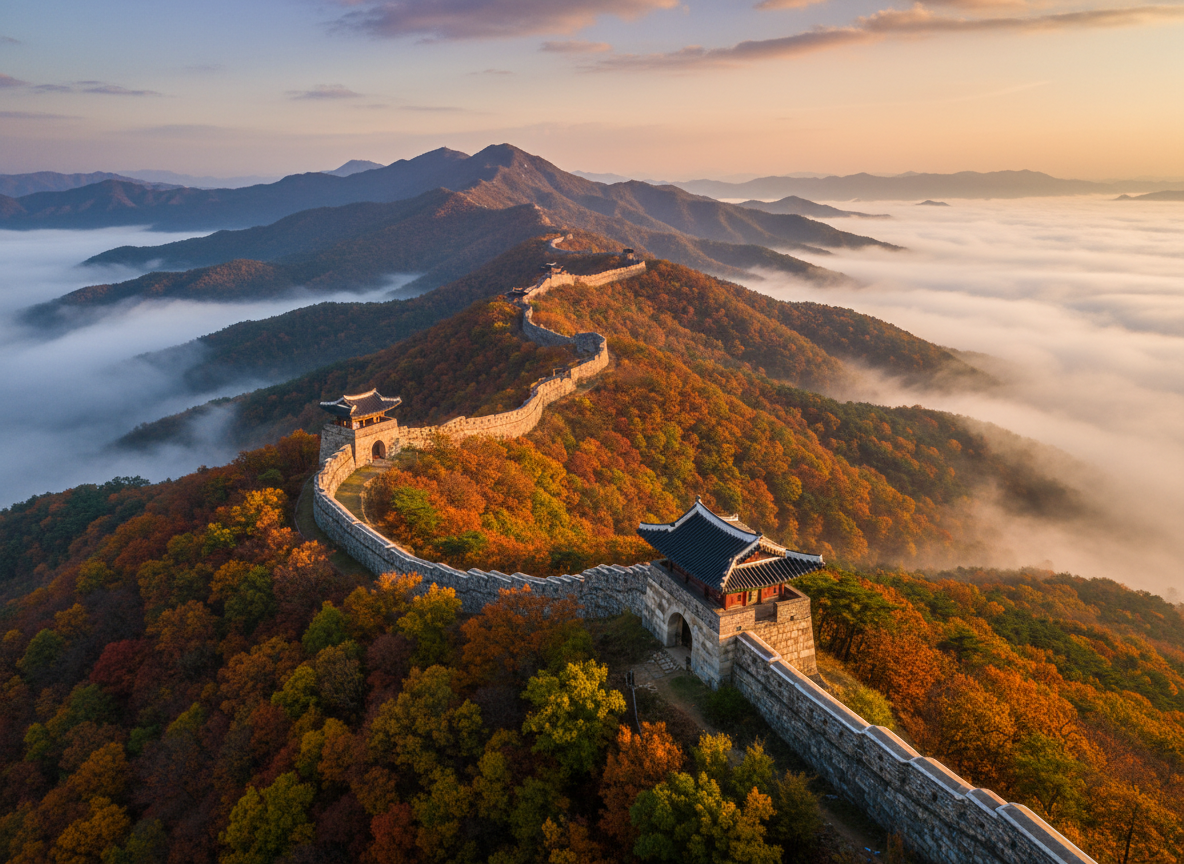
Namhansanseong is a mountain fortress east of Seoul that crowns a 480m-high ridge above the Han River basin, its stone walls tracing some 12.4km along forested slopes that once enclosed a fully functioning emergency capital. Located at Namhansanseong-ro 2173, Jungbu-myeon, Gwangju-si, Gyeonggi-do (GPS: 37.4794°N, 127.1774°E), just 25km southeast of central Seoul, the site feels surprisingly remote, yet is easily reached via Seoul Metro Line 8 to Sanseong Station (Exit 2), followed by local bus 9 or a short taxi ride, or by car in around 40 minutes via the Olympic Expressway, with parking available at the main entrance. Within these walls lay palaces, temples, barracks, government offices, and granaries, a self-contained refuge that took on its most tragic role in the winter of 1636–1637, when King Injo withstood a 47-day Manchu siege here before finally surrendering—a memory that still lends weight to every gate and rampart. Inscribed on the UNESCO World Heritage List in 2014 for its outstanding example of mountain fortress city planning, its layered history, and its near-complete preservation, Namhansanseong rewards slow, contemplative exploration rather than a quick photo stop. The fortress area is open at all hours year-round, while Haenggung Palace (행궁) welcomes visitors daily from 10:00–18:00 (March–October) and 10:00–17:00 (November–February), closing on Mondays, with admission set at ₩2,000 for adults and ₩1,000 for teenagers and children. Autumn brings spectacular foliage along the ridgeline paths, spring dots the slopes with wildflowers, and winter snow wraps the walls in ice and silence, leaving trails almost empty. Devote three to four hours to walking the full perimeter, starting at Dongmun (east gate) and heading clockwise for the finest ridge views, then reward yourself in the fortress village with local specialties such as tofu stew and mountain mushroom bibimbap, a culinary tradition in these hills for generations; those with extra time can continue the historical theme nearby at the Gwangju Joseon Royal Kiln Site Museum, about 30 minutes away by car.
✈️ QUICK FACTS
South Korea at a Glance
🏛️ 17 UNESCO World Heritage Sites (as of 2025)
📍 Almost all open to visitors year-round
🗓️ Best travel months: April–June (spring) and September–November (autumn)
🚆 Getting around: KTX high-speed rail connects most major heritage cities
💰 Entry fees: Most sites charge ₩1,000–₩5,000 (under $5 USD)
The 17 UNESCO World Heritage Sites in South Korea
To make sense of Korea’s UNESCO list, it helps to group them by theme: royal power and ritual, Buddhist spirituality, everyday scholarly life, ancient kingdoms, and wild nature. Here’s a traveler’s look at each one.
Palaces, Fortresses & Royal Ritual
1. Haeinsa Temple Janggyeong Panjeon (해인사 장경판전) — UNESCO Inscribed 1995
Nestled on the southern slopes of 1,430m-high Gayasan, Haeinsa Temple at Haeinsa-ro 122, Gayasan-myeon, Hapcheon-gun, Gyeongsangnam-do (GPS: 35.7997°N, 128.1057°E) is one of Korea’s most evocative pilgrim sites and a rewarding day trip from either Busan, 80km to the southwest, or Daegu, 88km to the east. Passing through the mountain gate, skip the shuttle bus and follow the 1.5km forest approach trail: an uphill path shaded by ancient pines and running beside a clear mountain stream, where the quiet of Gayasan National Park slowly replaces the noise of the city. In autumn, from late October to mid-November, this trail blazes with maple and ginkgo leaves; in early April it is softened by cherry blossoms and azaleas, while in winter a fresh snowfall transforms the dark timber halls into a serene monochrome landscape almost devoid of visitors. The temple grounds open from 08:30–18:00 (to 17:00 in winter; last entry 30 minutes earlier), but those who arrive from 04:00 may join or observe the pre-dawn Buddhist services that still structure monastic life here. Admission is ₩5,000 for adults (~$3.75 USD), ₩2,500 for teenagers, and ₩1,500 for children, with parking at ₩3,000. From Daegu Seobu Intercity Bus Terminal (서부시외버스터미널), direct buses depart every 40–60 minutes, taking around 1 hour 20 minutes (₩6,700), while from Busan Seobu Bus Terminal there is one direct morning service of about 2 hours; there is no subway access, but drivers can follow the Gwangju–Daegu Expressway to Haeinsa IC (Exit 24), then continue 15 minutes by local road. Yet it is the Janggyeong Panjeon that elevates Haeinsa to global significance: this pair of modest, beautifully proportioned storage halls shelters 81,258 individually carved wooden blocks of the Tripitaka Koreana, the most complete and accurate corpus of Buddhist scriptures in existence. Produced between 1237 and 1248 in the Goryeo Dynasty as a monumental act of devotion and a plea for divine protection against Mongol invasion, the work comprises some 52 million characters, each reportedly carved by a master artisan who bowed once in reverence after completing every character. Equally extraordinary is the preservation system devised in the late 15th century: there is no mechanical climate control, yet the halls’ louvred windows, raised floors, and walls made from a carefully balanced mixture of earth, charcoal, salt, lime, and sand, combined with their optimal orientation and subtle ventilation channels, have kept the woodblocks stable and intact for over eight centuries. Visitors cannot enter the storage halls and must instead peer through wooden lattice screens, but those who arrive before 09:00 may catch the resonant sound of monks’ chanting in the main hall, Daejeokgwangjeon, a moment that often becomes the emotional centre of the visit. After exploring the temple, consider extending your stay in Hapcheon-gun for a quiet night in the countryside and use Haeinsa as a springboard for hikes deeper into Gayasan National Park, where the mountain landscapes that first inspired this great monastic complex unfold in full.
2. Jongmyo Shrine (종묘) — UNESCO Inscribed 1995
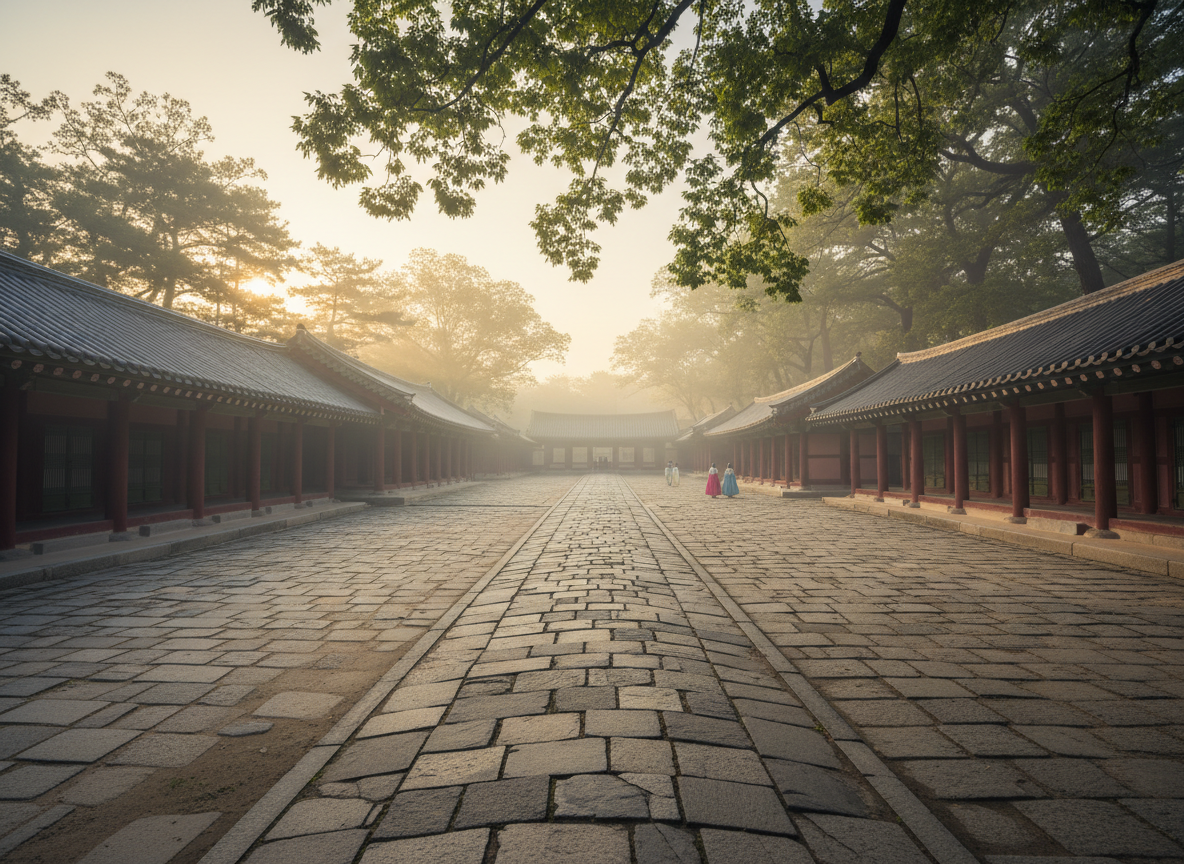
Jongmyo Shrine, at 157 Jongno-gu in central Seoul (GPS 37.5745°N, 126.9946°E), sits quietly between Changdeokgung Palace to the north and Cheonggyecheon Stream to the south, yet it is the spiritual heart of the Joseon Dynasty. Open Wednesday to Monday from 09:00–18:00 in spring and autumn (slightly longer in summer, shorter in winter) and every day on public holidays, it remains one of the most accessible and affordable UNESCO sites in the world, with admission at just ₩1,000 for adults, ₩500 for ages 7–18, and free entry for children under 7 and visitors over 65. The shrine is best experienced on the first Sunday of May, when the Jongmyo Jerye royal ancestral rite unfolds with solemn processions, costumed court officials, and the haunting strains of Jongmyo Jeryeak ritual music, itself separately UNESCO-listed. On ordinary days, arrive on a weekday morning in spring or autumn to walk the long stone courtyards in near silence, passing the spirit tablets of 19 Joseon kings and 30 queens housed within the 109‑metre‑long Jeongjeon, the longest wooden structure in Korea. Designed not to dazzle but to transcend, Jongmyo’s unadorned grey roof tiles, bare stone floors and disciplined austerity give weight to 600 years of unbroken Confucian ritual still tended by the Jeonju Yi clan, prompting UNESCO to hail it as “an outstanding example of a type of building that illustrates a significant stage in human history.” Reach the shrine via Jongno 3-ga Station (Lines 1 or 3, Exit 11, 3 minutes on foot) or a 10‑minute walk from Anguk Station through Insadong-gil, then continue on to Unhyeongung, Insadong’s craft galleries and tea houses, and nearby Changdeokgung, Bukchon Hanok Village, or Cheonggyecheon for a full immersion in historic Seoul.
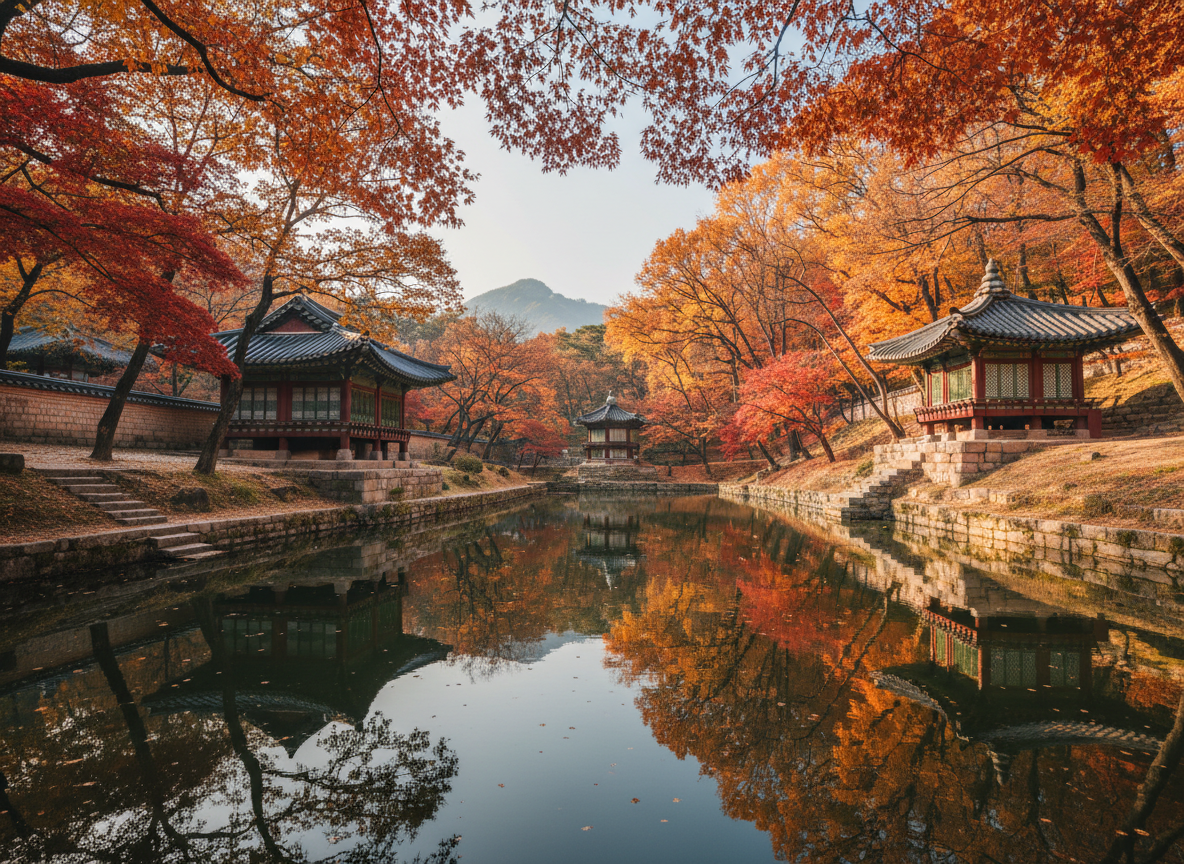
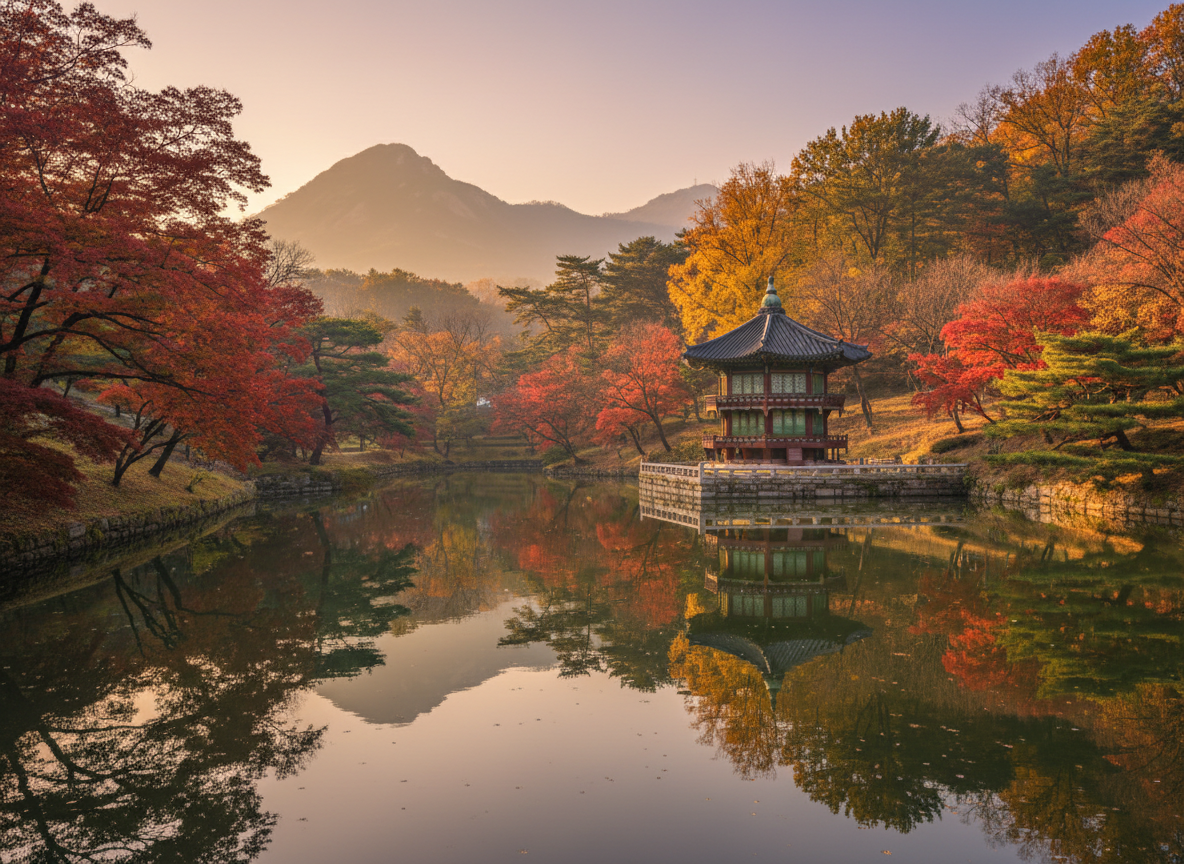
Often regarded as Seoul’s most gracefully preserved royal residence, Changdeokgung Palace Complex (창덕궁) occupies a tranquil pocket of central Seoul at 99 Yulgok-ro, Wonseo-dong, Jongno-gu, just a short walk north of Jongmyo Shrine and east of Gyeongbokgung. Inscribed on the UNESCO World Heritage List in 1997, it was praised as “an outstanding example of Far Eastern palace architecture” seamlessly integrated with its surrounding landscape, and it remains the most architecturally authentic of the capital’s five grand Joseon palaces. Visitors enter a compound where the palace buildings seem to rise naturally with the contours of the hills, leading back toward the famed Secret Garden (Huwon), a 78-acre royal retreat that was closed to the public until 1983. Here, 28 scattered pavilions, meandering paths, and mirror-like lotus ponds were designed not for ceremony but for solitude, culminating in features such as the Ongnyucheon Stream, a narrow watercourse carved directly into bedrock in 1636 that still murmurs through the forested slopes today. The garden is particularly enchanting from late October to early November, when maple, ginkgo, and persimmon trees blaze with color around Buyongji Pond, one of the most photographed scenes in Korea, and again in April when cherry blossoms soften the main courtyards. The complex is easily reached via Anguk Station (Line 3, Exit 3), a five-minute walk away, or by city buses 109, 151, 162, and 171, which stop nearby. The palace is open Tuesday to Sunday, with main halls accessible from 09:00–18:00 (April–October) and 09:00–17:30 (November–March); admission is ₩3,000 for adults and ₩1,500 for ages 7–18, with free entry for visitors wearing hanbok. To experience Huwon, plan ahead: combined palace and Secret Garden tickets cost ₩8,000 for adults and ₩4,000 for ages 7–18, but guided garden tours—typically at 10:00, 11:30, 14:00, and 15:30 in high season with fewer departures in winter—are capped at 50 people and often sell out several days in advance on the official website. Aim for the first tour of the day, when the garden is at its quietest and the interplay of light and shadow is at its most atmospheric, then continue your exploration on foot to nearby Bukchon Hanok Village, Insadong, or back toward Jongmyo Shrine for a full afternoon immersed in Seoul’s layered history.
4. Hwaseong Fortress (1997)
Wrapping around the heart of Suwon city just 30 kilometers south of Seoul, Hwaseong Fortress (수원화성) is one of Korea’s most rewarding UNESCO sites to explore, pairing grand Joseon-era ambition with the feel of a lived-in modern city. Centered around 320-2 Yeonghwa-dong, Paldal-gu, Suwon-si, Gyeonggi-do (경기도 수원시 팔달구 영화동 320-2; GPS 37.2858°N, 127.0136°E), the 5.7-kilometer circuit of stone walls enfolds traditional markets, busy commercial streets, and quiet residential lanes in a single, carefully planned urban design. Built between 1794 and 1796 by King Jeongjo of Joseon to honor his late father and create a model new city, the fortress was engineered by the renowned scholar Jeong Yak-yong, who deployed an innovative mobile crane, the geojunggi, to speed construction and allow for more technically ambitious defenses. Unlike earlier citadels devoted purely to military defense, Hwaseong was conceived as a complete city—fortress, royal palace, commercial hub, and neighborhoods integrated within one defensive ring—making it one of the most progressive construction projects in East Asia at the time. Its 48 military structures—majestic gates, watchtowers, bastions, observation posts, and water gates—blend Eastern concepts of layered defense with Western artillery theory, all interpreted in a distinctly Korean style. The fortress walls are accessible around the clock and are especially atmospheric in spring and autumn, when lanterns glow above cherry blossoms or fiery foliage and the entire circuit is dramatically illuminated at night. Allow about two hours to follow the full loop at a relaxed pace, pausing at overlooks for rooftop views across Suwon’s market district, and finish near Paldalmun Gate, where Suwon’s renowned galbi restaurants offer a memorable post-walk meal in the shadow of the ramparts.
5. Namhansanseong (2014)
Namhansanseong is a mountain fortress east of Seoul that once served as an emergency capital during invasions, its walls draped along forested ridges. Today, it’s a perfect half-day hike, combining historical gates and command posts with panoramic views back over the metropolis. It’s especially popular in autumn; go early or on weekdays for quieter trails and book lunch at a local restaurant in the fortress village.
6. Royal Tombs of the Joseon Dynasty (조선왕릉) — UNESCO Inscribed 2009
Scattered across Seoul and the surrounding Gyeonggi-do cities of Guri, Namyangju, Goyang, Suwon, and Hwaseong, the 40 Royal Tombs of the Joseon Dynasty form a remarkably intact funerary landscape that spans the dynasty’s entire 519-year rule (1392–1910). Designated as a UNESCO World Heritage Site in 2009 for their “outstanding testimony to Joseon dynasty culture,” these grassy mounds, encircled by pine forests and guarded by stone officials, warriors, and mythical animals, offer a rare window into how Confucian ideals and geomantic principles shaped both royal death and the living landscape. Each tomb is carefully oriented to face south, backed by sheltering hills and fronted by water, a textbook expression of pungsu (Korean geomancy) intended to optimise the flow of positive energy (gi) for the deceased monarch and the stability of the kingdom.
Among the 18 sites, the most accessible for visitors are Seolleung and Jeongneung (선릉·정릉) in Gangnam, located at 100 Seolleung-ro, Gangnam-gu, Seoul (GPS: 37.5086°N, 127.0473°E). Open Tuesday to Sunday—06:00–21:00 (June–August), 06:00–20:00 (March–May, September–October), and 06:30–17:30 (November–February), with Mondays closed—the grounds are surprisingly tranquil given their location amid office towers and busy boulevards. Admission is modest (adults ₩1,000; teenagers ₩500; children under 7 and visitors over 65 enter free), and Seolleung Station on Seoul Metro Line 2 (Exit 8) is just a five-minute walk away, making this one of the easiest heritage sites to include in a city itinerary.
The tombs are at their most atmospheric at dawn, when the forested ridges fill with birdsong before the city fully wakes, and in autumn, when crimson maples contrast sharply with the pale stone guardians. Many locals treat these parks as quiet walking routes, yet they remain living ritual spaces: descendant clans of the Jeonju Yi royal family still conduct ancestral rites here each spring, preserving an unbroken ceremonial tradition. For an unforgettable juxtaposition of past and present, step out from Gangnam’s glass towers into the 500-year-old royal forest of Seolleung, then continue on to COEX Mall, Bongeunsa Temple, or Apgujeong’s Garosu-gil for lunch and an urban stroll.
Buddhist Temples & Mountain Monasteries

Near Gyeongju on the western slopes of Tohamsan, Seokguram Grotto and Bulguksa Temple (석굴암·불국사), jointly inscribed on the UNESCO World Heritage List in 1995, form the spiritual and artistic heart of the former Silla kingdom. Bulguksa, at 385 Bulguk-ro, Gyeongju-si, Gyeongsangbuk-do (GPS 35.7898°N, 129.3320°E), unfolds as a meticulously planned vision of the Buddhist Pure Land on earth, its courtyards, wooden halls and stone terraces rising in measured harmony from the mountainside. Built in 751 AD under Prime Minister Kim Daeseong, the complex is approached via the celebrated twin staircases Cheongungyo and Baegungyo, both National Treasures, whose ascending flights and gatehouses symbolise the practitioner’s passage from the mundane world to enlightenment. In the main courtyard, the contrasting forms of Dabotap and Seokgatap, the finest stone pagodas of the Unified Silla period, anchor the space with a quiet gravity; Seokgatap’s almost uncanny precision was revealed during restoration in 1966, when a complete set of woodblock-printed Buddhist texts—the world’s oldest of its kind—was discovered sealed within. From Bulguksa a shuttle or a superb 2.8km pine-forested trail leads uphill to Seokguram at 873-243 Jinhyeon-dong (GPS 35.7945°N, 129.3466°E), where a domed granite chamber houses a 3.5m seated Buddha gazing toward the East Sea, encircled by 38 exquisitely carved attendant figures aligned to astronomical principles so refined that the Buddha’s brow catches the first light of the rising sun at the spring equinox. Allocate at least half a day, visiting at dawn in spring or autumn to hear Bulguksa’s bells echo across the valley and to experience Seokguram’s hillside sanctuary before the day’s first buses arrive; both sites are 16km east of downtown Gyeongju and easily reached by local bus, taxi or car, with Gyeongju’s major historic attractions and museums an easy onward journey away.
8. Sansa, Buddhist Mountain Monasteries in Korea (산사) — UNESCO Inscribed 2018
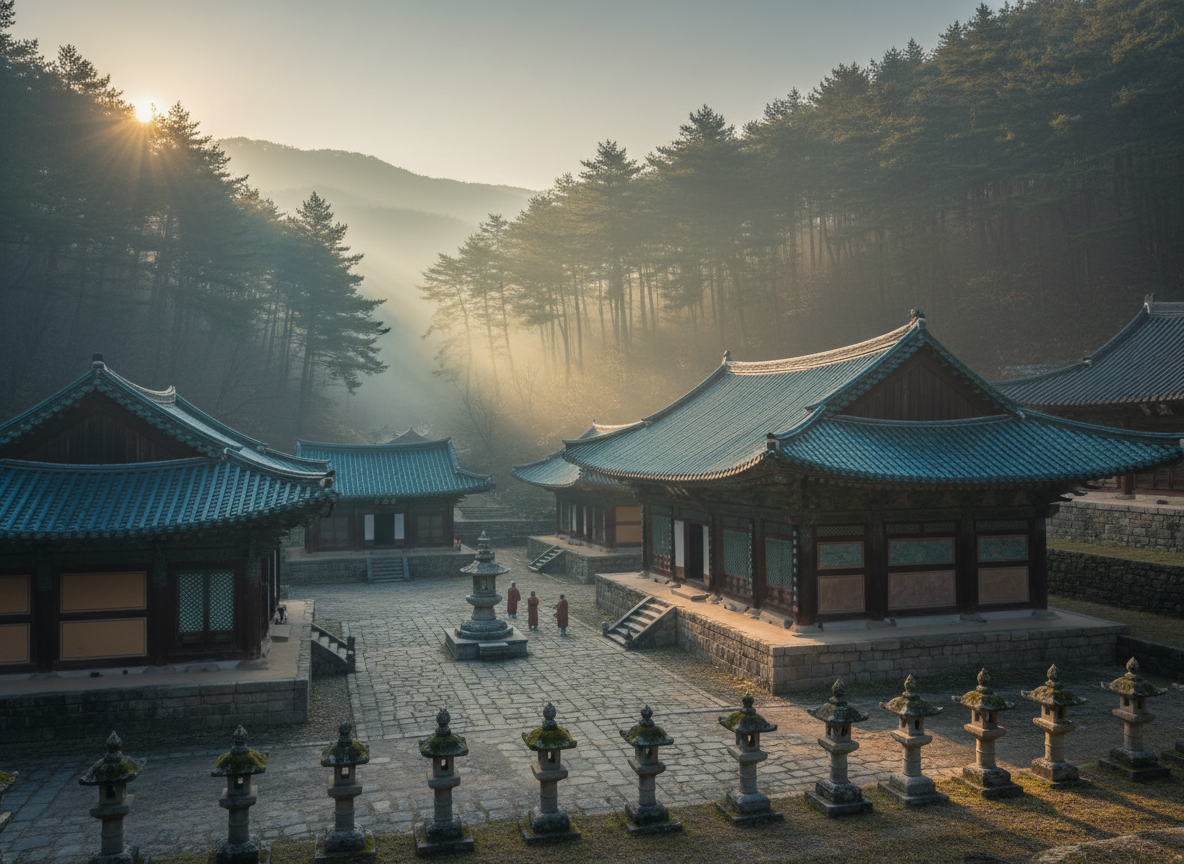
Nestled deep in forested valleys and along misty ridgelines, Korea’s sansa form a constellation of seven UNESCO‑listed mountain monasteries that still beat to the quiet rhythm of Buddhist practice. Scattered across the peninsula yet united by a shared spiritual landscape, they include Tongdosa (통도사) on Tongdosa-ro 108 in Yangsan-si, Gyeongsangnam-do; Beopjusa (법주사) on Songnisan-ro 84 in Boeun-gun, Chungcheongbuk-do; Magoksa (마곡사) on Magoksa-ro 966 in Gongju-si, Chungcheongnam-do; Seonamsa (선암사) on Seonamsa-gil 450 in Suncheon-si, Jeollanam-do; Daeheungsa (대흥사) on Daeheungsa-gil 400 in Haenam-gun, Jeollanam-do; and Buseoksa (부석사) on Buseoksa-ro 345 in Yeongju-si, Gyeongsangbuk-do, with Seonamsa and Daeheungsa anchoring the far south and Beopjusa the most convenient gateway from Seoul. Founded between the 7th and 9th centuries, these monasteries remain living communities where hundreds of monks and nuns follow centuries-old cycles of prayer, meditation, study, and communal work, embodying the “self-sustaining communal traditions” for which UNESCO granted inscription in 2018. Architecture and nature are inseparable here: halls and hermitages fold around streams, knolls, and ancient trees rather than imposing upon them. Tongdosa, the largest, is revered as the “Temple Without a Buddha,” its main hall devoid of statues because the surrounding mountains themselves are regarded as the Buddha’s presence, while Buseoksa’s Muryangsujeon hall, completed in 1376, stands as one of Korea’s oldest surviving wooden buildings. At Magoksa, ringed by whispering pine forests in South Chungcheong Province, the young independence activist Kim Gu once hid in contemplative seclusion, later crediting the monastery with shaping his inner life, and modern visitors can still sense that same quiet resolve in every courtyard and cloister, especially during an overnight temple stay that opens with predawn bells echoing through the valleys.

Scholars, Academies & Confucian Villages
9. Historic Villages of Korea: Hahoe and Yangdong (한국의 역사마을: 하회와 양동) — UNESCO Inscribed 2010
Hidden in the countryside of Gyeongsangbuk-do, the sister villages of Hahoe and Yangdong preserve over 500 years of aristocratic life, Confucian ritual, and vernacular architecture in two remarkably intact landscapes. Hahoe Village (하회마을), 25km west of Andong at 20 Hahoe-gil, Pungcheon-myeon, Andong-si (GPS: 36.5392°N, 128.5161°E), sits in a great oxbow of the Nakdong River, its name meaning “village that the river embraces.” The water curves around the settlement on three sides like a natural moat, protecting the tiled-roof mansions (giwa) of the Ryu clan of Pungsan that crown the higher slopes, while clusters of thatched commoner houses (choga) spread across the lower ground below, a visible diagram of Confucian hierarchy rendered in wood, stone, and earth. Yangdong Village (양동마을), 20km north of Gyeongju at 150 Yangdong-gil, Gangdong-myeon, Gyeongju-si (GPS: 35.9267°N, 129.2278°E), unfolds in a radial pattern from two ancestral halls of the Son and Yi clans, its lanes and homes strung across a series of ridges that exemplify pungsujiri, Korea’s traditional geomantic principles of village siting. Both remain living communities where residents still farm the surrounding fields and perform ancestral rites, making them rare examples of a cultural landscape that has never been frozen into mere museum pieces. Practical details are straightforward: reach Hahoe from Andong Bus Terminal on Bus 46 (every 40–60 minutes, about 40 minutes, ₩1,500), by taxi from Andong (₩15,000–₩18,000), or by car in roughly 30 minutes via Route 34; Yangdong is accessible from Gyeongju Bus Terminal on Bus 203 (around 40 minutes, ₩1,500), by taxi (about ₩15,000), or a 25-minute drive north on Route 7. Both villages open daily 09:00–18:00 (March–October) and 09:00–17:00 (November–February), with admission set at ₩3,000 for adults, ₩1,500 for teenagers, and ₩1,000 for children. Visit in April or May, when wildflower meadows soften Hahoe’s riverbanks, or in October, when persimmons hang heavy and rice fields glow gold around both sites; this is also when Hahoe hosts the Andong Mask Dance Festival, one of Korea’s most celebrated cultural events, with performances staged in the village itself. For a deeper experience, stay in a traditional hanok guesthouse in either village, then rise early or linger after dusk: in Hahoe, the walk to the sandy bank of the Nakdong at sunset, when the village and the cliffs opposite mirror in still water, ranks among the most memorable rural vistas in Korea. Nearby cultural stops include the Andong Folk Museum (around 20 minutes from Hahoe), the hilltop serenity of Dosan Seowon Confucian Academy (about 40 minutes from Andong), and historic Gyeongju city, just 30 minutes from Yangdong.
10. Seowon, Korean Neo-Confucian Academies (서원) — UNESCO Inscribed 2019
Scattered across six provinces yet united by a shared intellectual spirit, the nine UNESCO-inscribed seowon are Korea’s quintessential Neo-Confucian academies, founded between 1543 and 1868 as private schools for the country’s scholarly elite. Here, away from the formality of the state-run Sungkyunkwan in Seoul, students studied classic Neo-Confucian texts, debated ethics and governance, and performed ancestral rites to revered teachers whose legacies each academy carefully preserved. Architecturally, the seowon are deliberately restrained: unadorned wooden lecture halls open to mountain and river views, tiled roofs resting lightly on simple columns, and ancestral shrines placed at the rear in strict hierarchical order, all arranged to embody harmony with the surrounding landscape.
Three academies are especially convenient for travelers. Sosu Seowon (소수서원), Korea’s first seowon founded in 1543, lies at 44-97 Sosu-ro, Sunheung-myeon, Yeongju-si, Gyeongsangbuk-do (GPS: 36.8742°N, 128.6285°E). Closer to Andong, Dosan Seowon (도산서원), at 154 Dosanseowon-gil, Andong-si (36.6647°N, 128.9022°E), honors the great scholar Yi Hwang (Toegye), while Byeongsan Seowon (병산서원), at 386 Byeongsan-gil, Andong-si (36.5517°N, 128.5258°E), is widely regarded as the most beautiful of the nine. Its Mandapru pavilion, an airy wooden veranda framing the Nakdong River and the sheer face of Byeongsan cliff like a living landscape painting, is considered one of the masterpieces of traditional Korean architecture and epitomizes the qualities for which UNESCO recognized the seowon as “an outstanding example of the building typology of the Neo-Confucian academy.”
Most academies open daily from 09:00–18:00 (March–October) and 09:00–17:00 (November–February; check locally for variations). Admission currently stands at approximately ₩3,000 for adults at Sosu Seowon, ₩1,500 at Dosan Seowon, while Byeongsan Seowon is free. All three can be visited from Andong or Yeongju: from Andong Bus Terminal, a local bus reaches Dosan Seowon in about an hour (around ₩2,000), and taxis cover the 25-minute journey to Byeongsan Seowon for roughly ₩12,000; from Yeongju Station, Sosu Seowon is about 15 minutes away by taxi (around ₩8,000). Autumn, when fiery foliage reflects in ponds and rivers, offers the most photogenic conditions, while spring is ideal for quieter visits. Traditional ancestral rites (hyangsa) are held twice yearly, in spring and autumn, at each academy; schedules vary by site, so confirm in advance.
For a deeper experience, allocate time simply to sit in Mandapru at Byeongsan Seowon in the late afternoon and watch the light shift across the Nakdong River and cliffs — many visitors consider an unhurried hour here the highlight of their Andong itinerary. Dosan and Byeongsan can comfortably be combined in a single day trip from Andong, with Hahoe Village just 20 minutes from Byeongsan providing a natural extension, alongside a stop at the Andong Soju Museum and a meal of the city’s signature Andong jjimdak.
Ancient Kingdoms, Tombs & Archaeology
11. Gyeongju Historic Areas (2000)
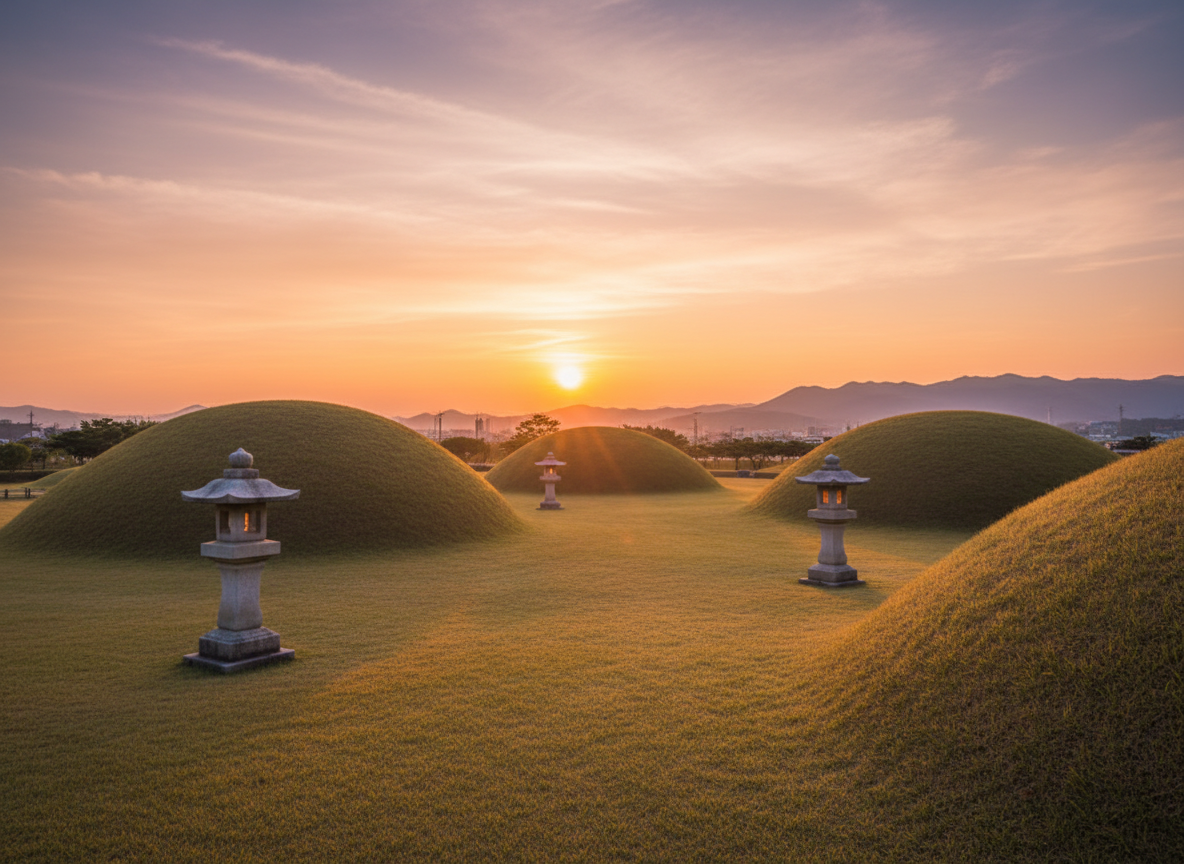
Once the capital of the Silla kingdom, Gyeongju is often called a “museum without walls,” its fields dotted with tomb mounds, pagodas, palace sites, and relic-filled museums. The historic areas include temple remains, observatories, and royal tomb clusters that trace a thousand years of Korean history. Rent a bicycle to connect between key sites like Tumuli Park, Anapji (Donggung Palace and Wolji Pond), and Cheomseongdae at your own pace.
12. Gochang, Hwasun and Ganghwa Dolmen Sites (2000)
These three areas protect some of the world’s most impressive concentrations of dolmens — massive prehistoric stone tombs that predate many of Europe’s megaliths. Scattered across fields and hills, they hint at complex Bronze Age rituals and social structures. They’re a bit out of the way, so they’re best for travelers with extra time or a strong interest in early human history, often paired with nearby coastal or rural destinations.
13. Baekje Historic Areas (2015)
Spread across Gongju, Buyeo, and Iksan in the country’s southwest, these sites showcase the Baekje kingdom, which played a key role in transmitting culture and Buddhism to Japan. Fortresses, temple sites, and royal tombs reveal a softer, more open style of urban planning and architecture compared to later Joseon austerity. They’re great for road trips, with gentle river views and small-city atmospheres that contrast sharply with Seoul’s intensity.
14. Gaya Tumuli (2023)
The Gaya Tumuli encompass multiple clusters of tomb mounds associated with the Gaya confederacy, a network of city-states known for advanced iron production and coastal trade. Excavations have revealed intricate grave goods and evidence of a vibrant culture wedged between more dominant neighboring kingdoms. These sites are perfect for history enthusiasts who enjoy quieter, less commercialized heritage areas, often combined with visits to nearby Busan or coastal towns.


15. Petroglyphs along the Bangucheon Stream (2025)
Carved into rock faces along the Bangucheon Stream, these petroglyphs depict animals, hunting scenes, and symbolic motifs from Korea’s prehistoric and early historic periods. They offer a direct, almost intimate connection to people who lived millennia ago, long before palaces and pagodas. Access may involve short walks or local guidance, making this an excellent stop for travelers who appreciate quiet, contemplative sites far off the standard tourist circuit.
Nature & Living Landscapes
16. Jeju Volcanic Island and Lava Tubes (2007)
Jeju Island’s UNESCO status highlights its volcanic craters, lava tubes, and dramatic coastal cliffs, rather than its beach resorts. The Manjanggul Lava Tube, Seongsan Ilchulbong (Sunrise Peak), and Hallasan volcano showcase the island’s geological story in very walkable form. It’s ideal for active travelers; combine summit hikes or coastal walks with local food markets and seaside cafes.
17. Getbol, Korean Tidal Flats (2021)
Getbol refers to expansive tidal flats along Korea’s west and south coasts, crucial for migratory birds and packed with marine life beneath the mud. These living landscapes are less about monuments and more about rhythm: tides, bird migrations, and traditional shellfish gathering. Access is often through designated visitor centers and guided walks, both to protect fragile ecosystems and help visitors understand what they’re seeing.
Which UNESCO Sites Are Actually Visitable?
The good news is that nearly all of Korea’s UNESCO World Heritage Sites are open and welcoming to visitors, from casual sightseers to serious history buffs. Palaces like Changdeokgung, shrines such as Jongmyo, fortress walks at Hwaseong and Namhansanseong, and historic cities like Gyeongju are all set up with clear paths, multilingual signage, and convenient public transport links.
There are a few nuances. Some royal tombs have inner zones that remain off-limits to protect sacred areas, but you can still walk the surrounding forests and view the mounds and stone guardians up close. Getbol’s tidal flats usually require visiting designated observatories or joining guided tours to avoid damaging fragile habitats and to navigate the fast-changing tides safely. A few of the more remote sites, like certain seowon or dolmen clusters, may have limited public transport, so renting a car or joining a small group tour can make the experience smoother.
Overall, if you’re comfortable using Korea’s trains and buses — or renting a car for a few days — you’ll find these UNESCO sites accessible, well-signed, and generally uncrowded outside peak weekends and holidays.
Top Visited Spots Beyond UNESCO
Gyeongbokgung Palace (Seoul) — The grandest Joseon palace, rebuilt and restored, with towering gates, photogenic changing-of-the-guard ceremonies, and sweeping views to Bugaksan mountain.
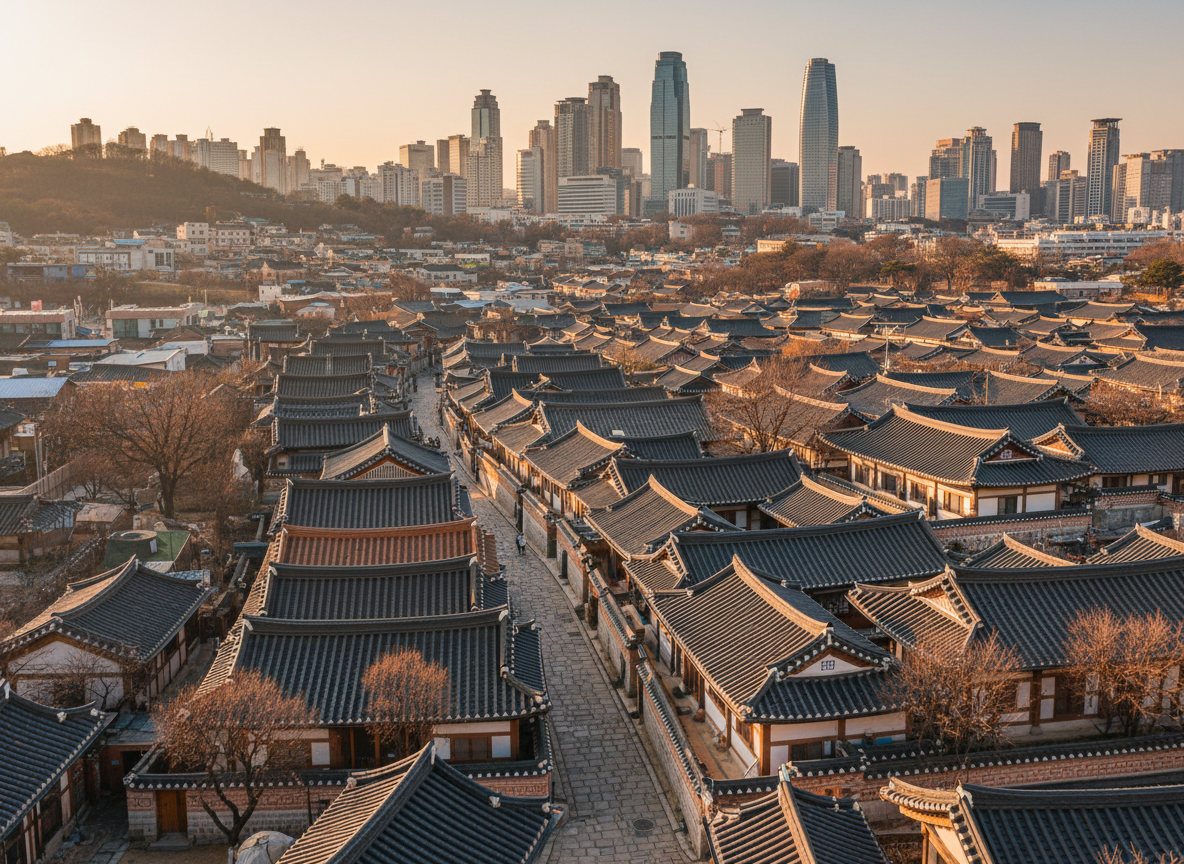
Bukchon Hanok Village (Seoul) — A hillside neighborhood of preserved traditional hanok houses between palaces, perfect for strolling narrow lanes and catching rooftop views of the city.
N Seoul Tower (Seoul) — Rising above Namsan Park, the tower offers classic panoramic city views, especially atmospheric at night when the city glows beneath you.
Myeongdong (Seoul) — A frenetic shopping and street-food district where you can sample everything from skewers and tteokbokki to K-beauty products and pop-up fashion.
Gamcheon Culture Village (Busan) — A once-modest hillside community transformed into a maze of colorful houses, public art, and small galleries overlooking the Busan harbor.
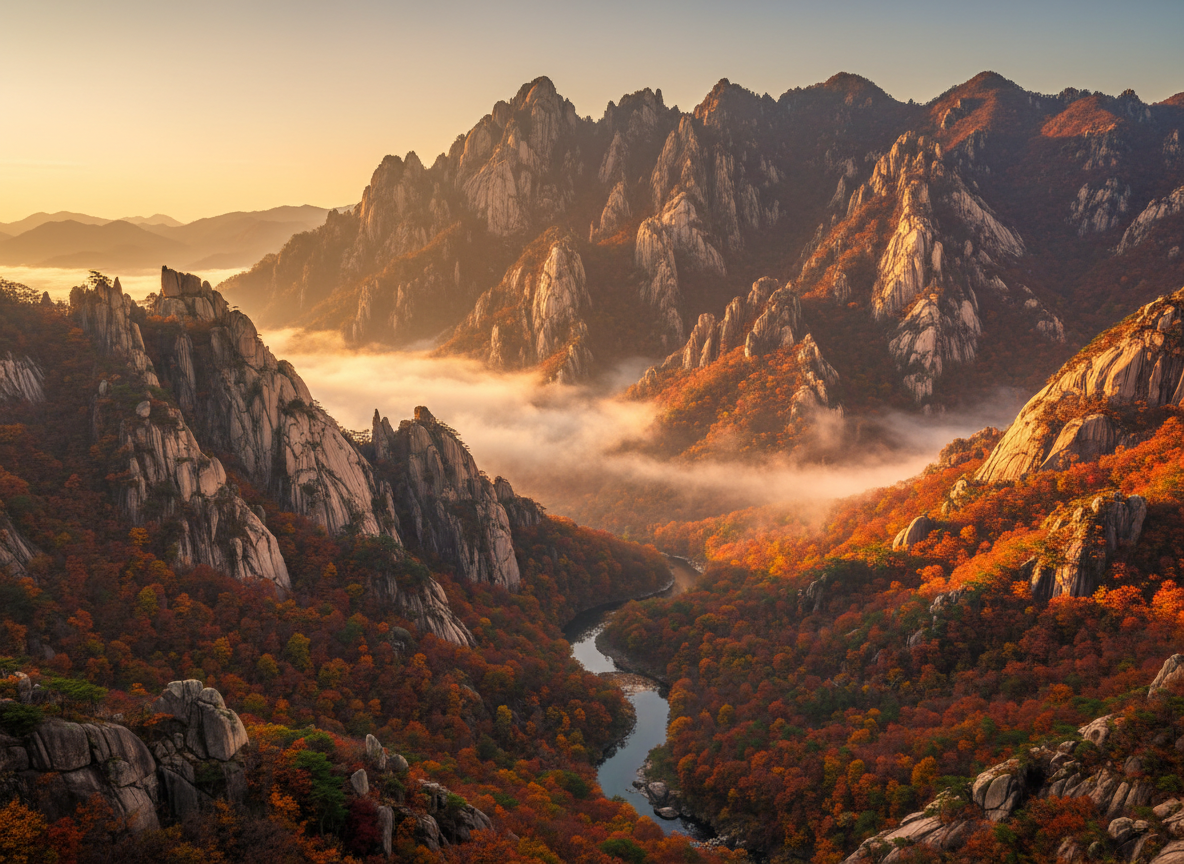
Seoraksan National Park (Gangwon-do) — One of Korea’s most beloved mountain parks, known for jagged peaks, clear streams, autumn foliage, and a range of trails from cable-car viewpoints to full-day hikes.
Quick Reference: South Korea’s UNESCO World Heritage Sites
| Site | Location | Best For | Open to Public |
|---|---|---|---|
| Haeinsa Temple Janggyeong Panjeon | Gayasan, Gyeongsangnam-do | Buddhist history, mountain scenery | Yes |
| Jongmyo Shrine | Central Seoul | Royal ritual, Confucian culture | Yes |
| Seokguram Grotto and Bulguksa Temple | Gyeongju, Gyeongsangbuk-do | Iconic Buddhist art and temples | Yes |
| Changdeokgung Palace Complex | Central Seoul | Palace architecture, Secret Garden walks | Yes (Secret Garden via tour) |
| Hwaseong Fortress | Suwon, Gyeonggi-do | City views, fortress walks | Yes |
| Gochang, Hwasun and Ganghwa Dolmen Sites | Jeollabuk-do, Jeollanam-do, Incheon | Prehistoric archaeology, quiet landscapes | Yes |
| Gyeongju Historic Areas | Gyeongju, Gyeongsangbuk-do | Ancient capital, museums, cycling | Yes |
| Jeju Volcanic Island and Lava Tubes | Jeju Island | Hiking, geology, coastal scenery | Yes (with designated trails) |
| Royal Tombs of the Joseon Dynasty | Seoul and surrounding cities | Forest walks, royal history | Yes (some inner zones restricted) |
| Historic Villages of Korea: Hahoe and Yangdong | Near Andong & Gyeongju | Traditional villages, hanok stays | Yes |
| Namhansanseong | Gwangju, Gyeonggi-do (east of Seoul) | Hiking, fortress ruins, city views | Yes |
| Baekje Historic Areas | Gongju, Buyeo, Iksan | Ancient kingdom sites, river scenery | Yes |
| Sansa, Buddhist Mountain Monasteries | Various mountain areas nationwide | Temple stays, quiet retreats | Yes |
| Seowon, Korean Neo-Confucian Academies | Multiple rural locations | Scholarly history, calm countryside | Yes |
| Getbol, Korean Tidal Flats | West & south coasts | Birdwatching, coastal ecology | Partial (via visitor centers/tours) |
| Gaya Tumuli | South Gyeongsang & nearby regions | Ancient tombs, lesser-known history | Yes |
| Petroglyphs along the Bangucheon Stream | Bangucheon area, South Korea | Rock art, early cultures | Yes (site-dependent access) |
Why You Should Go Beyond the Usual Stops
It’s easy to build a Korea itinerary around Seoul, Busan, and perhaps Jeju — and you should, because they’re lively, rewarding places. But the UNESCO World Heritage Sites add an entirely different layer: they’re where you feel the country stretch back in time, beyond neon signs and subway lines, into kingdoms, rituals, and landscapes that shaped the Korea you see today.
❝
Korea doesn’t just show you history — it lets you walk through it, sleep in it, and sometimes eat next to it.
— Every traveler who went beyond Seoul
If you have a week, add at least one lesser-known site such as the Baekje Historic Areas or Haeinsa. With two weeks, you can venture even further to places like the Gaya Tumuli, a mountain monastery stay, or the Petroglyphs along the Bangucheon Stream. The effort of going a little off the standard route is rewarded with quiet temples at dusk, empty fortress walls at sunrise, and the feeling that you’re not just visiting Korea, but really meeting its past.
 XPLORE KOREA
Leave a comment